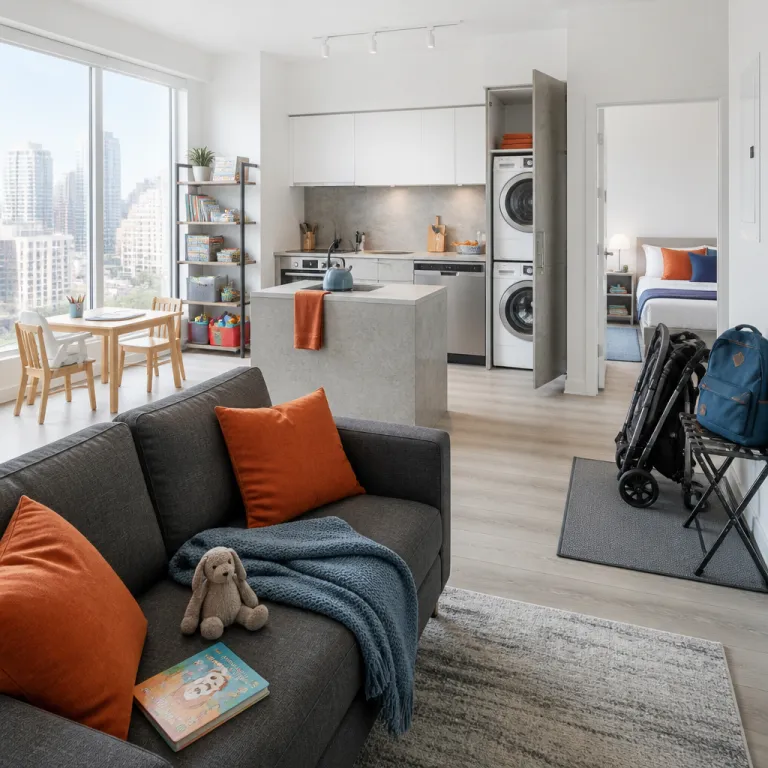
City apartment rental for families: when the hotel model stops working
By day four of a dense urban vacation, the classic family hotel stay usually starts to fray. Parents whisper in the dark of a single hotel room while kids fight jet lag, and the supposed luxury of room service feels less charming when you are hiding in the bathroom to take a call. For many travelers with children, this is the moment when the question of choosing a family friendly city apartment instead of a hotel stops being theoretical and becomes very real.
Urban rentals change the rhythm of a stay because they shift you from guest to temporary resident in the city. Instead of navigating hotel corridors and elevators, you are learning the door code of an apartment house, figuring out which staircase leads fastest to the street, and working out where the nearest bakery sits in relation to the tram stop. That subtle change in daily accommodation patterns is exactly why families increasingly see apartment rentals as the better option for longer stays.
Across major cities, vacation rentals now sit alongside every traditional hotel, giving families a genuine choice between two distinct styles of travel. Industry data from sources such as AirDNA and Statista, combined with sample searches on large online travel agencies, suggests that the average hotel cost per night often exceeds the average apartment rental cost per night, especially once you factor in the need for two hotel rooms or a larger hotel apartment to fit everyone comfortably. When you compare a two week vacation rental to a two week stay in a hotel and run a simple worked example for a family of four, the cost, the space, and the sense of home all start to tilt the balance toward renting apartment style accommodation.
Space, privacy and sanity: why apartments suit two week family stays
Space is the first non negotiable for a two week urban stay with kids. A standard hotel room rarely gives a family the physical and mental distance needed for naps, early bedtimes, and the inevitable meltdowns that come with city travel. In the debate over family friendly city apartments versus hotel rooms, the ability to close a bedroom door and still have a living room to sit in is often the decisive factor.
Most apartment rentals offer separate rooms, a real dining table, and a sofa that does not need to double as a bed every night. That extra space turns a stay from survival mode into something closer to everyday life, where parents can read, work, or talk while children sleep in another room. For families used to long term routines at home, this continuity of private space during a vacation makes the unfamiliar city feel safer and better regulated for kids.
Hotels, even excellent luxury hotels, are designed around short, intense stays rather than longer visits with children. Connecting rooms help, but they increase the total cost and still keep you within the rituals of hotel life, from housekeeping knocks to breakfast cut off times. An apartment rental or hotel apartment with a separate living area, by contrast, lets you stretch out, unpack fully, and treat the city as your extended neighbourhood rather than a backdrop glimpsed between elevator rides, as one London based family discovered when a two week stay in a compact Paris rental finally gave them evenings that did not revolve around whispering in the dark.
Cost, kitchens and laundry: the quiet math of urban family rentals
When you run the numbers on a two week city stay, the cost story becomes clear very quickly. Data from family travel research and online travel agency reports suggests that the average hotel cost per night can sit around 140 USD, while the average apartment rental cost per night can be closer to 114 USD for comparable locations and quality. For a family comparing city apartments with hotels, that gap compounds across fourteen nights, especially when two hotel rooms are required.
Those headline figures do not even include the hidden cost of eating every meal out during a vacation. A modest apartment with a functional kitchen lets you turn breakfast and some dinners into relaxed, cost effective rituals at home, which is especially valuable for younger children who tire of restaurant noise. Over longer stays, the ability to cook, reheat leftovers, and store snacks in a full size fridge often matters more than any luxury amenity a rental hotel or traditional property can offer, and a quick back of the envelope calculation shows that replacing just one restaurant meal per day with a simple home cooked option can save a family hundreds of dollars over a two week trip.
Laundry is the other quiet hero of apartment based accommodation, because many apartments include in unit machines that dramatically reduce packing needs. Families can travel with smaller suitcases, wash clothes every few days, and avoid paying hotel fees for laundry services that add up quickly. When you weigh these practical savings against the nightly rate of a hotel room, the total value of vacation rentals and apartment rentals becomes hard to ignore for serious travelers who are planning multi city itineraries or extended slow travel stays.
Neighbourhoods that work: Barcelona, Paris and Tokyo for slow family travel
Choosing accommodation in the right neighbourhood is where decisions about family city apartments versus hotels become truly strategic. In Barcelona, the Eixample district offers a grid of wide pavements, regular playgrounds, and residential apartment house buildings that feel calm even when the city centre pulses nearby. Here, vacation rentals and apartment rentals place you within walking distance of bakeries, markets, and metro stops without the late night noise of the Gothic Quarter hotels, and many parents planning a two week family apartment in Barcelona Eixample find that this balance between local life and easy transport keeps everyone happier.
Paris rewards families who look beyond postcard views and focus on daily life, especially for a two week stay. The 11th arrondissement, with its market streets, canal walks, and dense network of small parks, is ideal for renting apartment options that balance local character with easy métro access, and many travelers find it better suited to children than more tourist heavy districts. One family who swapped a central hotel for a compact two bedroom rental near Rue Oberkampf reported that their children remembered the local playground and the Saturday market far more vividly than any monument, because rentals in this part of the city offer a mix of compact luxury apartments and simple, well designed spaces where a family can return after a long day and feel genuinely at home.
Tokyo’s Shimokitazawa district shows how a carefully chosen city neighbourhood can transform a family vacation into slow travel. Here, narrow streets lined with vintage shops, record stores, and pocket sized parks create a village atmosphere that contrasts sharply with the neon intensity around major hotels in Shinjuku or Shibuya. A modest hotel apartment or small vacation rental above a café in Shimokitazawa gives children a manageable slice of the city, while parents enjoy some of the best independent culture in town within a few hundred metres of their front door, and several repeat visitors now plan their two week family apartment in Tokyo around this neighbourhood rather than the traditional hotel zones.
From hotel guests to temporary residents: shifting how your family uses the city
Moving from a hotel stay to an apartment based vacation is not just a change of accommodation type, it is a change of mindset. In conversations about family city rentals versus hotels, the most satisfied families are those who treat a two week rental as a chance to live the city’s everyday rhythms. That means embracing grocery shopping as an activity, learning the names of local bakers, and mapping playgrounds the way you once mapped museums.
Morning routines become anchors rather than rushed transitions between hotel breakfast and sightseeing, especially when you have your own kitchen and a predictable route to the nearest park. Children thrive on this kind of structure, and parents often find that a slower, more residential pattern of travel leads to deeper engagement with the city itself. Instead of measuring success by the number of attractions visited, you start to judge a stay by the café where the barista remembers your order or the square where your kids make local friends.
For families used to the service layers of luxury travel, this shift can feel radical at first. Yet many travelers report that the trade off between constant hotel attention and the autonomy of a well chosen apartment rental is decisively better for longer stays with children. Once you have experienced the ease of having your own keys, your own washing machine, and your own quiet room after bedtime, returning to a standard hotel model for a two week city break becomes hard to justify, especially when you compare the overall value of a family friendly city apartment with the cost and constraints of a traditional hotel.
How to book the right city apartment for a two week family stay
Finding the best apartment for a two week urban vacation starts with clear priorities. When you compare family friendly city apartments and hotels on platforms such as Airbnb, VRBO, or local agencies, filter first by neighbourhood, then by layout, and only then by décor. Families should treat choosing accommodation as a design brief, where the non negotiables include a separate bedroom for parents, a real kitchen, and a nearby park within a five to ten minute walk.
Look closely at floor plans and photos to understand how rooms connect, because a beautiful apartment that forces adults to walk through a child’s room late at night will quickly feel less than ideal. For longer stays, prioritise a washing machine, blackout curtains, and quiet bedrooms facing an inner courtyard rather than a busy street, even if that means sacrificing some views. Minimum stay discounts often make a fourteen night vacation rental significantly more cost effective than two separate hotel bookings, especially once cleaning fees are spread across more nights and you factor in the savings from cooking and laundry.
Before you commit, read reviews with an eye for family specific details such as noise levels, staircases, and lift access, and always confirm amenities like cribs or high chairs directly with the host. Flexible cancellation policies matter for families, but so does host responsiveness, because you are relying on this person rather than a hotel front desk if something breaks. Once you have booked, save the address in your maps, mark playgrounds and supermarkets nearby, and treat your rental as the anchor for a slower, richer relationship with the city over those two weeks.
Key figures for family city rentals versus hotels
- Average hotel cost per night for family suitable rooms can reach around 140 USD in many urban destinations, while the average apartment rental cost per night often sits closer to 114 USD for comparable locations and comfort, which creates meaningful savings over a two week stay for families.
- Travel research and online booking data indicate that city apartments are generally cheaper than hotels for longer stays, because nightly rates drop with extended bookings and families avoid paying for multiple hotel rooms to secure enough space.
- Most apartments offer more space than hotels, typically including separate living areas and kitchens, which directly improves comfort levels for parents and children during dense urban vacations.
- Many rental apartments include in unit laundry facilities, allowing families to pack lighter and reduce or eliminate hotel laundry charges, which can be significant over fourteen nights.
- City apartments are suitable for short stays as well, but cleaning fees can make them less competitive on cost for one or two nights compared with a single hotel room in the same neighbourhood.
FAQ: city apartments versus hotels for two week family stays
Are city apartments cheaper than hotels for family trips ?
Are city apartments cheaper than hotels? Yes, especially for longer stays. Once you factor in the need for two hotel rooms, restaurant meals, and laundry, a well chosen apartment usually delivers a lower total cost for a two week family vacation.
Do apartments offer more space than hotels for families ?
Do apartments offer more space than hotels? Yes, typically with separate living areas. Families benefit from having distinct rooms for sleeping, playing, and relaxing, which is rare in standard hotel layouts.
Can families cook in rental apartments during a city stay ?
Can families cook in rental apartments? Yes, most have full kitchens. This allows parents to prepare simple meals, manage picky eating, and keep a flexible schedule that suits children rather than restaurant opening hours.
Are apartments suitable for short urban stays with kids ?
Are apartments suitable for short stays? Yes, but cleaning fees may apply. For one or two nights, a hotel might still be more practical, while apartments become more attractive once you stay beyond three or four nights.
Do rental apartments usually provide laundry facilities for guests ?
Do apartments provide laundry facilities? Many include in unit laundry. This is particularly valuable for families on longer trips who want to pack light and keep children comfortable in clean clothes throughout a busy city vacation.