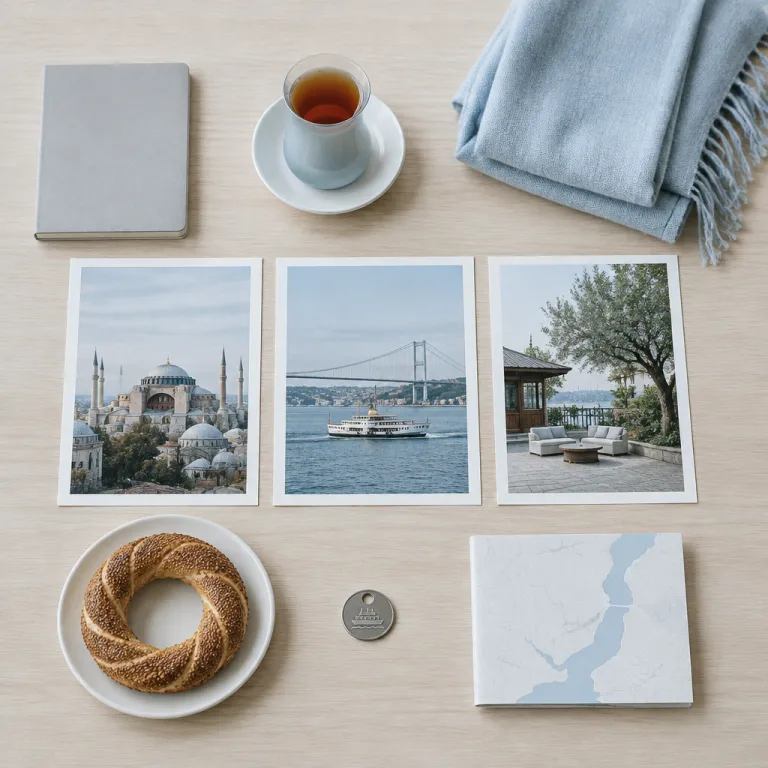
Istanbul itinerary: how to plan a refined 3–5 day city break
Designing an Istanbul itinerary for a refined urban escape
Planning an Istanbul itinerary starts with understanding how the city breathes. This is a metropolis where each day unfolds between continents, and every time you cross the Bosphorus you feel the urban rhythm shift. To visit this layered city well, you need a route that balances landmark highlights with quieter neighbourhood moments and realistic transport times.
Begin by mapping how many days you can give the city. With three days you can structure a day Istanbul program that focuses on one side of the city at a time, keeping transfer time low and walking routes elegant. If you have more days, you can slow the pace and add deeper experiences such as a dedicated food tour or a morning exploring less visited districts along the Golden Horn.
For a first visit Istanbul journey, I recommend staying near Sultanahmet or across the Golden Horn near Karaköy. From Sultanahmet you are roughly a 5–10 minute walk from the great mosque complexes, the ancient cistern, and the former imperial palace that shaped the Ottoman centuries. On the opposite side, staying near Galata Tower places you close to the livelier nightlife and the modern energy of Taksim Square.
- Day 1 at a glance: Sultanahmet, Hagia Sophia Grand Mosque, Blue Mosque, Basilica Cistern, Gülhane Park, Topkapı Palace.
- Day 2 at a glance: Grand Bazaar, Spice Bazaar area, Galata Bridge, Galata Tower, İstiklal Avenue and Taksim Square.
- Day 3 at a glance: Kadıköy and Moda on the Asian side, Bosphorus ferry or cruise, Dolmabahçe Palace.
Historic peninsula: mosques, palaces and timeless squares
Dedicate your first day to the historic peninsula, where Istanbul began. This is the heart of any serious Istanbul itinerary, and the area where the city’s layers of empire, faith, and trade sit almost on top of each other. Start early to make the best time use of cooler morning hours and quieter streets.
Begin in Sultanahmet Square, framed by Hagia Sophia Grand Mosque on one side and the Blue Mosque on the other. This square once formed the Hippodrome of Constantinople, and today it remains the most atmospheric place to feel the city’s Byzantine and Ottoman past in a single glance. Many travellers find that a guided tour here helps them understand how the sultan used architecture and ceremony to project power across the empire.
Allow generous time to visit Hagia Sophia, which has functioned again as a mosque since 2020 after serving for decades as a museum, and then cross to the Blue Mosque with its elegant cascade of domes. From Sultanahmet it is only a 5–7 minute walk to the Basilica Cistern, where cool air and dim light offer a welcome pause from the city above. When you step back into daylight, continue your itinerary through Gülhane Park, once the outer gardens of Topkapı Palace, and reflect on how this green side of the city softens the monumental stone.
Topkapı Palace itself deserves at least half a day, especially if you are interested in Ottoman court life. The palace complex reveals how each sultan reshaped the residence over century after century, adding new courtyards, pavilions, and views over the Golden Horn and the Bosphorus. If you are interested in how other coastal capitals balance heritage and modernity, compare this experience later with a refined urban stay in Rabat, Morocco’s coastal capital.
- Suggested timing: 08:30–10:30 Hagia Sophia and Sultanahmet Square; 10:30–11:30 Blue Mosque; 11:30–12:15 Basilica Cistern; 14:00–17:30 Topkapı Palace via Gülhane Park.
- Useful transport: T1 Bağcılar–Kabataş tram line, Sultanahmet and Gülhane stops, both within a short walk of the main monuments.
Markets, waterfronts and the European side after dark
Your second day Istanbul plan should focus on trade, neighbourhood life, and the city’s European side waterfronts. Start at the Grand Bazaar early, when the lanes are just opening and the light falls softly on centuries old stone. This is where you feel how the bazaar shaped Istanbul as a global trading city, long before modern retail arrived.
From the Grand Bazaar, walk downhill through the spice scented streets toward the Golden Horn. You will find smaller bazaars and workshops along the way, each one revealing a different side of Turkish craftsmanship, from copperware to textiles and ceramics. Take time to visit a traditional han courtyard, where traders once stayed overnight and where some artisans still work today.
Cross the Galata Bridge to reach Karaköy, then climb toward Galata Tower for one of the most complete city panoramas. From the top you can trace your previous day’s itinerary across Sultanahmet, see the curve of the Golden Horn, and look toward the Asian side that you will explore later. In the evening, head north toward Taksim Square and İstiklal Avenue, where cafés, galleries, and rooftop terraces show how Istanbul’s European side has become a contemporary urban playground.
This is also an excellent time to join a curated food tour that focuses on regional Turkish cuisine. Many such tours weave through backstreets off İstiklal, where you can taste dishes from across Anatolia in a single evening and learn how migration has shaped the city’s palate. Travellers who enjoy comparing Mediterranean city breaks often pair Istanbul with a stay in Nice on the French Riviera, noting how each city uses its waterfront differently.
- Suggested timing: 09:00–11:30 Grand Bazaar and nearby hans; 11:30–13:00 walk via Spice Bazaar and Galata Bridge; 15:00–17:00 Galata Tower and streets; evening on İstiklal Avenue and Taksim Square.
- Useful transport: T1 tram to Beyazıt–Kapalıçarşı for the Grand Bazaar; Karaköy stop for Galata Bridge; F1 funicular between Kabataş and Taksim for late returns.
Crossing continents: Asian side neighbourhoods and Bosphorus palaces
No Istanbul itinerary is complete without time on the Asian side. This is where the city feels more residential, with markets and streets that cater primarily to locals rather than visitors. Plan at least one full day to explore this side at a relaxed pace.
Take a morning ferry from Karaköy or Eminönü across the Bosphorus, watching the city skyline shift as mosques, towers, and palaces slide past. The short crossing is a highlight in itself, giving you time to appreciate how the Golden Horn meets the wider strait and how the city’s geography has shaped its history. Once you arrive, focus your visit on neighbourhoods such as Kadıköy and Moda, where café culture, bookshops, and waterfront promenades create a softer urban rhythm.
Many travellers choose to combine the Asian side with a Bosphorus cruise that passes Dolmabahçe Palace and the waterside façades of later Ottoman residences. Dolmabahçe Palace represents a different century of imperial taste compared with Topkapı Palace, with European influences visible in its grand halls and crystal staircases. If your time visit allows, consider a guided tour that explains how the sultan moved court life here as the empire modernised.
On the return journey, watch the city lights come on across both sides of the Bosphorus. This is often the moment when visitors understand why Istanbul has captivated travellers for so many days and centuries. For urbanists interested in how emerging districts evolve, it is worth reading about design led quarters such as Munich’s Westend, explored in depth in this analysis of a neighbourhood quietly outpacing Berlin for a design focused city break, and then comparing those dynamics with Kadıköy’s evolution.
Alternative routes: chora mosque, hidden cisterns and quiet parks
Once you have covered the essential landmarks, refine your Istanbul itinerary with quieter sites. The restored Chora Mosque, formerly the Chora Church, lies in the Edirnekapı district and rewards those willing to spend extra time away from the main tourist axis. Its mosaics and frescoes, when visible, offer one of the most intimate encounters with Byzantine art in the city.
Reaching Chora Mosque takes planning, as it sits beyond the usual Sultanahmet to Galata corridor. You can combine this visit with a walk along the old city walls and a detour through neighbourhoods that show a more everyday side of Istanbul, far from the bazaar crowds. This is an excellent way to balance the intensity of sites such as Hagia Sophia and the Blue Mosque with more contemplative spaces.
Back toward the historic core, consider exploring lesser known cisterns beyond the famous Basilica Cistern. Several smaller cisterns have opened to visitors in recent years, each one revealing how the city managed water storage over century after century. Between visits, return to Gülhane Park or other green spaces to rest, reflect, and adjust your itinerary for the remaining days.
Urban travellers who value parks within dense cities will appreciate how Gülhane Park softens the monumental architecture of Topkapı Palace. The park’s paths, viewpoints, and seasonal plantings show how carefully planned green space can change the way you experience a historic city. This balance between stone and foliage recurs in sophisticated urban getaways worldwide, from Istanbul to coastal capitals and compact European centres.
Practical structure: timing, transport and where to focus each day
To make your Istanbul itinerary work smoothly, think in terms of clusters rather than isolated sights. Grouping visits by neighbourhood reduces transport time and keeps each day focused, which is especially important in a city that spans two continents. Aim to limit yourself to two major interior visits per day, such as a mosque and a palace, to avoid cultural fatigue.
The best time to visit major sites like Hagia Sophia, the Blue Mosque, and Topkapı Palace is early morning on weekdays. Arriving at opening time allows you to experience these spaces with fewer crowds and softer light, which enhances both photography and contemplation. Remember that mosques close to visitors during prayer times, so always check schedules and build flexibility into your time visit planning.
Public transport in Istanbul is efficient, with trams, metros, and ferries connecting most areas you will include in a first visit Istanbul plan. The tram line that runs through Sultanahmet toward the Grand Bazaar and across the Golden Horn is particularly useful for visitors, as many key stops lie within a 5–10 minute walk of major sights. For evening returns from Taksim Square or the Asian side, taxis and ride hailing services can save time, especially if you are travelling in a small group.
When allocating days, consider dedicating one full day to Sultanahmet and its surroundings, one day to the Grand Bazaar, Galata Tower, and Taksim Square, and one day to the Asian side and Dolmabahçe Palace. Additional days can then be used for Chora Mosque, extra food tour experiences, or simply revisiting favourite squares and parks. This structure keeps your Istanbul itinerary both ambitious and realistic, allowing you to appreciate the city’s depth without rushing.
Urban getaway insights: how Istanbul compares to other leading city breaks
For travellers who collect urban getaways, Istanbul occupies a distinctive place. Few cities combine a working harbour like the Golden Horn, imperial palaces such as Topkapı Palace and Dolmabahçe Palace, and neighbourhood squares as lively as Taksim Square within a single itinerary. This makes the city an ideal benchmark when you evaluate other destinations for future trips.
Compared with compact European centres, Istanbul demands more days and more careful time management. The city’s scale, the split between European and Asian sides, and the density of historic sites mean that a two day Istanbul stay will always feel compressed. A three to five day Istanbul itinerary, by contrast, allows you to move beyond headline sights and engage with local routines, from morning simit stalls to evening ferries.
Urban travellers often compare Istanbul with Mediterranean city breaks, North African coastal capitals, and Central European design hubs. Each of these destinations offers its own mix of squares, markets, and waterfronts, but Istanbul’s combination of mosques, bazaars, and palaces remains singular. When you plan your next city, use the structure of your Istanbul itinerary as a template, asking how many days you need, which neighbourhoods form natural clusters, and where you will find both monumental architecture and everyday life.
In this way, Istanbul becomes more than a single visit; it becomes a reference point. The city teaches you how to read urban layers, from Byzantine cisterns to Ottoman mosques and modern tram lines. That skill will serve you well whether you are mapping a weekend in a European port, a stay in a North African capital, or a longer exploration of emerging creative districts across the continent.
Key figures for planning an Istanbul city break
- According to the Turkish Ministry of Culture and Tourism, Istanbul welcomed 14.9 million international visitors in 2019, making it one of the most visited cities worldwide and underscoring the need to plan your time visit carefully (see the ministry’s official tourism statistics for current figures).
- Data from the Istanbul Metropolitan Municipality indicate that the T1 tram line serving Sultanahmet carries several hundred thousand passengers per day, which explains why staying within a 5–10 minute walk of a tram stop can significantly reduce daily transport time.
- UNESCO notes that the Historic Areas of Istanbul, including Sultanahmet, Hagia Sophia, the Blue Mosque, and Topkapı Palace, cover roughly 765 hectares (inscribed in 1985), illustrating why a well structured Istanbul itinerary should allocate at least one full day to this zone.
- Surveys by major travel booking platforms consistently show that three to four days is the most common duration for a first visit Istanbul trip, with travellers who stay five days or more reporting higher satisfaction scores for depth of experience.
FAQ about planning an Istanbul itinerary
How many days do I need for a first Istanbul itinerary ?
For a first visit Istanbul journey, plan at least three full days. This allows one day for Sultanahmet and the historic core, one day for the Grand Bazaar, Galata Tower, and Taksim Square, and one day for the Asian side and Dolmabahçe Palace. If you can extend to five days, you will have time for Chora Mosque, additional cisterns, and a slower food tour experience.
What is the best time of year to visit Istanbul for an urban getaway ?
The best time to visit Istanbul is generally spring and autumn, when temperatures are mild and crowds slightly lighter than peak summer. These seasons make walking between sites such as Hagia Sophia, the Blue Mosque, and Topkapı Palace more comfortable. Winter can be atmospheric with fewer visitors, while summer offers long days but requires more careful planning around heat.
Should I stay on the European side or the Asian side ?
For a first Istanbul itinerary, most travellers prefer staying on the European side, either near Sultanahmet for easy access to major monuments or near Galata and Karaköy for nightlife and contemporary culture. The Asian side offers a more residential feel and excellent food, making it ideal for repeat visitors or longer stays. Ferries run frequently, so you can still spend significant time on both sides regardless of where you sleep.
How can I avoid long queues at major sights like Hagia Sophia and Topkapı Palace ?
Arrive at opening time on weekdays, and consider pre purchasing tickets or joining a reputable small group tour that includes priority entry. Structuring your day Istanbul plan so that you visit one major interior site in the morning and another in the late afternoon can also help you avoid peak crowds. Always check current visitor information from official channels before finalising your itinerary.
Is Istanbul a walkable city for urban travellers ?
Central districts such as Sultanahmet, the Grand Bazaar area, Galata, and parts of the Asian side are very walkable, though streets can be steep and paved with cobblestones. Many key sights lie within a 10 to 15 minute walk of each other, especially around Sultanahmet and Gülhane Park. Combining walking with trams, metros, and ferries gives you the most efficient and atmospheric way to experience the city.