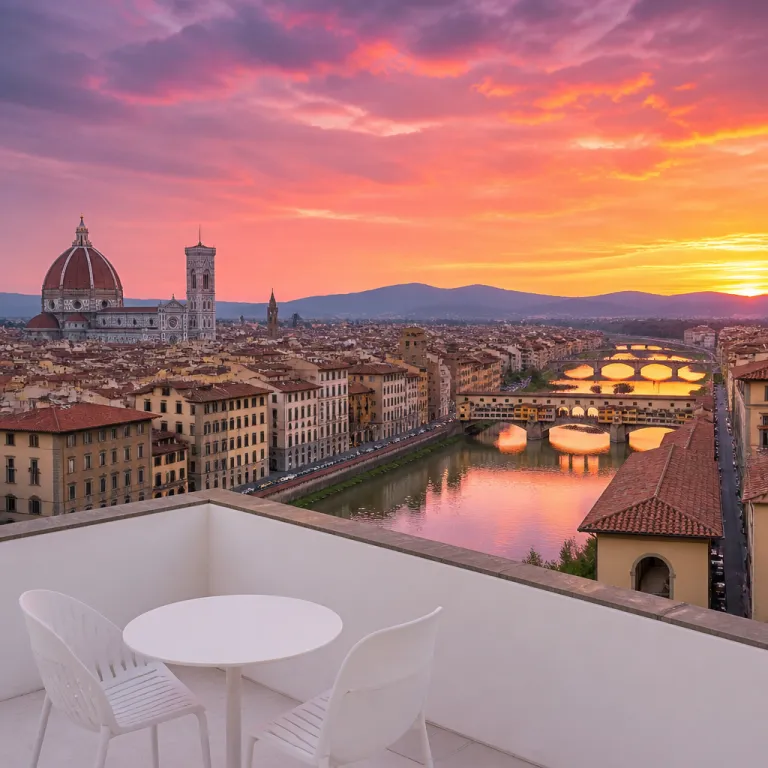
Designing an elegant two day Florence itinerary for urban travelers
Two days in Florence can feel brief, yet this compact Tuscan city rewards the urban traveler who plans with precision. With a focused itinerary, you can move from the Duomo to the Arno in a single day while still finding time for espresso pauses and quiet courtyards. The key is to treat this short stay as a curated urban getaway rather than a rushed checklist.
Start your first day in Florence early at Piazza del Duomo, when the light softens the marble of Santa Maria del Fiore and the crowds remain thin. Climb Giotto’s bell tower instead of the dome if you prefer cleaner lines, fewer steps at once, and uninterrupted views of the cupola del Duomo itself. From this height, the city grid, the palazzi, and the Arno form a compact urban canvas that helps you understand how to use your time over the next 48 hours.
After descending, circle the exterior of the cathedral and pause at the Baptistery before stepping into Santa Maria del Fiore for a short visit. Allocate no more than one hour inside so that your morning does not vanish before you reach your next museum or piazza. A disciplined approach to time in Florence allows you to appreciate the art without sacrificing the urban rhythm of cafés, markets, and side streets.
Late morning, walk toward Piazza della Signoria, letting the streets guide you past San Lorenzo and its market stalls. This route keeps you in the historic center while revealing how daily life flows between church façades, small workshops, and contemporary fashion stores in the city. When you arrive at Piazza della Signoria, the open air sculpture gallery and the profile of Palazzo Vecchio introduce the political heart of Florence in a single sweeping view.
For travelers used to dense cities, the historic core feels immediately legible, which makes it ideal for short urban breaks. The compact distance between the Duomo, Palazzo Vecchio, and the Arno means you can walk almost everywhere in a day without needing public transport. That walkability is why a weekend here is enough to experience both headline monuments and quieter corners if you follow a thoughtful guide.
Throughout your stay, think of each day as a balanced composition of art, food, and open air spaces. Alternate a museum visit with a piazza pause, then a church interior with a stroll along the river, so your senses never feel saturated. This rhythm turns your limited time in Florence into a refined urban retreat rather than a tiring marathon of sights.
Day one in Florence: from the Duomo to the Arno
Begin the first full day in Florence with a coffee at a bar near Piazza del Duomo, standing at the counter like residents do. Caffè Scudieri on Piazza San Giovanni and Caffè Gilli on Piazza della Repubblica are classic options where you can order an espresso and a pastry in under fifteen minutes. From there, walk directly into the cathedral complex, using a prebooked time slot for the dome or bell tower to avoid wasting the morning in line.
Many travelers ask whether they should prioritize the climb del Duomo or Giotto’s tower, and for urban aesthetes the tower often wins because it frames the city in more geometric perspectives. Plan roughly 60–90 minutes for the climb and views, including time to catch your breath and take photographs. Once you have taken in the skyline, cross to the quieter side of the piazza and follow the streets toward Piazza della Signoria.
This short walk links the religious center around Santa Maria del Fiore with the civic center around Palazzo Vecchio, and it helps you feel how power once moved through the city. On arrival, pause to study the statues in the Loggia dei Lanzi, where copies of works by Michelangelo and others stand in dialogue with the façades around the square. Spend about 20 minutes here before continuing.
Late morning is ideal for your first major museum visit, and the Uffizi Gallery sits only a few steps from Piazza della Signoria. With just two days in Florence, reserve a timed ticket and limit yourself to a focused route through the Uffizi, concentrating on Botticelli, Leonardo, and the rooms that lead toward views of the Arno. A structured plan inside this museum protects your time and leaves space for the rest of the day.
Consider joining a small group tour with a certified local guide inside the Uffizi Gallery if you value context as much as aesthetics. In a well run small group, a local guide can connect the art to the streets you walked earlier, explaining how the Medici family shaped both the palazzo and the city. This kind of tour turns a dense museum into a narrative that supports the rest of your Florence itinerary.
After the Uffizi, step out toward the river and cross Ponte Vecchio, where goldsmiths’ windows reflect the afternoon light. The bridge can feel crowded at any time of day, so move slowly, look down the Arno, and then continue toward the quieter Oltrarno side to restore balance. This transition from the formal art of the Uffizi to the lived in streets beyond Ponte Vecchio is essential to understanding Florence as a real city rather than an open air museum.
As evening approaches, walk or take a short taxi ride up to Piazzale Michelangelo for a panoramic view over Florence. Arrive at least half an hour before sunset to secure a place along the terrace wall and watch the Duomo, Palazzo Vecchio, and the bell tower of Santa Croce shift in color. This is one of the most atmospheric moments of your short city break, when the skyline compresses into a single luminous scene.
If you are planning other urban celebrations, you can borrow timing strategies from guides on how to plan a multi day city break in lively neighbourhoods elsewhere in Europe. The same principles of pacing, neighborhood hopping, and balancing activity with rest apply when you design your first day in Florence. Treat the center as a series of distinct districts, each with its own mood, and your limited days will feel expansive.
Day two in Florence: Oltrarno, gardens, and artisan streets
The second day in Florence invites you to cross the river again and explore the Oltrarno district at a slower pace. Start in the morning at Santo Spirito, where the piazza feels more residential and the church interior offers a calmer counterpoint to Santa Maria del Fiore. This area shows how the city breathes beyond its most photographed façades.
From Piazza Santo Spirito, walk toward Pitti Palace, the former Medici residence that now houses several museum collections. With only two days in Florence, choose one section of Pitti Palace, such as the Palatine Gallery, and then reserve time for the Boboli Gardens behind it. The combination of palace interiors and terraced gardens gives you both art and open air views across the city.
The Boboli Gardens work best when you treat them as an urban park rather than a formal monument. Climb gradually to the higher terraces, pausing to look back at the dome of Santa Maria del Fiore and the tower of Palazzo Vecchio rising above the roofs. This elevated perspective helps you connect the different quarters you have walked over the past days in Florence.
After the gardens, descend again toward the Arno and choose a café or wine bar for a light lunch. Around Via Santo Spirito and Borgo San Jacopo you will find small spots serving crostini, salads, and glasses of Tuscan wine that fit easily into a one hour break. This is an ideal moment to reflect on your itinerary and decide whether to return to a favorite piazza, a museum you rushed, or a church such as Santa Croce that you have not yet seen.
In the afternoon, consider a themed walking tour with a local guide focused on artisan workshops in the Oltrarno. A small group tour through these streets reveals studios where leatherworkers, bookbinders, and contemporary designers reinterpret the city’s craft heritage. This kind of experience balances the grand art of Michelangelo and the Uffizi with the living creativity of present day Florence.
Urban travelers who enjoy refined city breaks elsewhere will recognize a similar layering of history and modern life here. Resources that outline sophisticated day itineraries for urban travelers seeking culture and style in other compact historic centers can inspire you to think of Florence not only as a destination but as a model for concentrated cultural escapes. The same mindset of mixing museums, markets, and green spaces translates seamlessly between these cities.
As evening falls on your second day, return to the north bank and walk once more through Piazza della Signoria or along the Arno near Ponte Vecchio. The city feels different at this time, with office workers heading home and the façades of palazzi glowing in artificial light. Ending both evenings with a riverfront stroll reinforces the sense of an urban getaway rather than a purely touristic sprint.
Essential art and architecture: from the Duomo to Michelangelo
Any serious urban itinerary for two days in Florence must prioritize a coherent selection of art and architecture. The Duomo complex, with Santa Maria del Fiore, the Baptistery, and the bell tower, anchors this selection both visually and historically. Around it, a network of churches and museums forms a compact circuit that can be explored on foot within a day.
Inside Santa Maria del Fiore, take a few minutes to study the frescoed interior of the dome before moving on. The climb del Duomo rewards those who enjoy close contact with architectural structure, but if you have already chosen the bell tower, you can allocate that time to another site. This flexibility is crucial when you only have two days in Florence and want to avoid museum fatigue.
Santa Croce, often called the Pantheon of Florence, deserves a dedicated visit for its tombs of Michelangelo, Galileo, and other figures. The church stands slightly east of the Duomo, in a piazza that feels more open and less crowded at many times of day. Including Santa Croce in your itinerary adds a layer of intellectual history to the visual splendor of the Uffizi and Palazzo Vecchio.
San Lorenzo and the Medici Chapels offer another perspective on power and art in the city. Here, Michelangelo’s sculptural work interacts with the architecture in a way that feels almost cinematic, especially when viewed with a knowledgeable local guide. If you are short on time, a small group tour that combines San Lorenzo with nearby sites can condense this experience into a single efficient block of the day.
San Marco, north of the Duomo, houses Fra Angelico’s frescoes in former monastic cells, creating an intimate museum that contrasts with the scale of the Uffizi Gallery. Because San Marco is smaller, you can visit in under an hour, making it ideal for the second morning of your two days in Florence. The quiet cloister and the measured pace inside provide a welcome pause between more crowded attractions.
Travelers often ask, “What are must-see attractions in Florence?” and the most concise answer remains : “The Duomo, Uffizi Gallery, Ponte Vecchio, and Michelangelo's David.” This quote aligns with the experience of many repeat visitors who find that these four anchors structure their days in Florence. Around them, you can layer additional churches, palazzi, and smaller museums according to your interests.
For those who enjoy sophisticated urban escapes elsewhere, curated guides to essential urban sights in other historic cities can offer a useful comparative framework. They show how to prioritize a handful of key monuments, a central piazza, and one or two quieter quarters, which is exactly how you should think about Florence. Apply that same discipline here, and your two days will feel both rich and manageable.
Smart museum strategy: Uffizi, palaces, and time management
With only two days in Florence, museum strategy becomes as important as the list of places you want to visit. The Uffizi Gallery alone can absorb an entire day if you wander without a plan, which is why a curated route or a professional guide is invaluable. Think of each museum as one movement in a larger symphony of the city.
For the Uffizi, reserve a morning or late afternoon slot and decide in advance which sections matter most to you. Many urban travelers focus on the early Renaissance rooms, the Botticelli gallery, and the corridors that frame views of the Arno and Ponte Vecchio. Limiting yourself to these highlights keeps your energy intact for the rest of the day.
Palazzo Vecchio offers a different kind of museum experience, blending civic history with grand interiors and views from its tower. A short guided tour through its halls can be combined with a climb to the top, where you look back toward the Duomo and across Piazza della Signoria. This combination works particularly well on the first afternoon of your two days in Florence, when you are still orienting yourself in the city.
Pitti Palace on the Oltrarno side demands another strategic choice, because its multiple museums can easily overwhelm a short stay. Select either the Palatine Gallery for painting, the Royal Apartments for courtly life, or the modern art section if you prefer a different era, then pair that choice with time in the Boboli Gardens. By treating Pitti Palace and the gardens as a single half day block, you protect the rest of your itinerary from creeping delays.
Smaller museums such as San Marco or the Museo dell’Opera del Duomo can be slotted into gaps in your schedule. The Museo dell’Opera del Duomo, in particular, deepens your understanding of the cathedral complex by housing original sculptures and panels that once stood outside. Visiting it either before or after your time at the Duomo creates a satisfying narrative arc within your two days in Florence.
Whenever possible, consider joining a small group tour led by a certified local guide for at least one major museum. These tours often include timed entry, which saves precious minutes in a short urban getaway and ensures you spend more of the day with the art than in queues. For independent travelers, high quality digital guides and official museum apps can also support a self paced visit without sacrificing depth.
Remember that Florence functions as a living city, not just a collection of galleries, so leave unscheduled time between museum blocks. A spontaneous espresso near a piazza, a detour down a side street, or a few quiet minutes on a bench can be as memorable as a famous painting. This balance between structure and openness is what turns two days in Florence into a refined urban experience rather than a compressed checklist.
Urban rhythm and neighborhoods: piazzas, markets, and daily life
Beyond its museums and churches, Florence rewards travelers who pay attention to the urban rhythm of its neighborhoods. Each piazza has a distinct personality, and learning to read these spaces will enrich your two days in Florence more than any additional monument. Think of the city as a sequence of rooms, each with its own light, sound, and tempo.
Piazza del Duomo feels ceremonial, dominated by Santa Maria del Fiore, the Baptistery, and the bell tower, and it is best appreciated early in the day. Piazza della Signoria, by contrast, functions as an open air civic stage, with Palazzo Vecchio and its tower presiding over statues that narrate the city’s political past. Spending time in both squares on the same day helps you sense the shift from sacred to secular power in Florence.
Further west, Piazza Santa Maria Novella offers a more relaxed atmosphere, framed by the elegant façade of the church and several historic pharmacies and hotels. This area works well as a base for urban travelers because it sits close to the train station, making day trips by rail easy while still keeping you within walking distance of the Duomo. If you stay nearby, you can step into the piazza at different times of day and watch how the light and the crowd change.
The San Lorenzo district, just north of the Duomo, introduces another layer of city life through its market and food halls. Here, the Medici church of San Lorenzo rises above stalls selling leather goods and produce, illustrating how commerce and spirituality have long coexisted in Florence. A short visit to the market during your two days in Florence offers insight into contemporary tastes and habits.
On the Oltrarno side, the area around Santo Spirito and Pitti Palace feels more residential and bohemian. Piazza Santo Spirito fills with locals in the evening, and the streets nearby host artisan workshops that you can explore on a guided tour or independently. This neighborhood is ideal for travelers who want their days in Florence to include both heritage and present day creativity.
Urban getaways often benefit from a conscious balance between iconic sights and ordinary streets. In Florence, that might mean pairing a morning at the Uffizi Gallery with an afternoon wandering between San Marco and the university quarter, or combining a visit to Santa Croce with a walk along less crowded stretches of the Arno. Such combinations ensure that your two days in Florence feel grounded in the real city rather than confined to its most photographed corners.
As you move through these neighborhoods, pay attention to small details : the sound of church bells marking the hour, the way residents navigate narrow streets by bicycle, the interplay of laundry lines and Renaissance stonework. The smell of fresh bread from a forno or the clink of cups in a standing-room-only bar can anchor your memory of a single corner. These impressions will linger long after the exact sequence of your itinerary fades and are what transform a short stay into a lasting urban memory.
Practical tips, timing, and refined day trips from Florence
Planning two days in Florence with precision requires attention to timing, logistics, and personal energy. The city welcomes several million visitors annually according to regional tourism statistics, which means that your experience will depend heavily on when and how you move. A thoughtful strategy allows you to enjoy the highlights without feeling overwhelmed.
Travelers often ask, “Is two days enough to see Florence?” and the most accurate answer is : “Yes, with a well-planned itinerary, you can cover major highlights.” This does not mean you will see everything, but it does mean that a focused combination of the Duomo complex, the Uffizi Gallery, Ponte Vecchio, and one or two additional churches or palazzi can form a satisfying core. Accepting this limitation from the outset will make your days in Florence feel more intentional.
Another frequent question concerns the best time to visit, and the guidance remains consistent : “What is the best time to visit Florence?” and the answer is : “Spring and early autumn offer pleasant weather and fewer crowds.” For urban travelers, these seasons also mean more comfortable temperatures for walking between piazzas and climbing bell towers. If your schedule is flexible, aligning your two days in Florence with these periods will significantly improve your experience.
Comfortable shoes are essential, because the historic center is best explored on foot and many streets are paved with uneven stones. Book museum tickets in advance for the Uffizi, the Accademia, and the Duomo complex, especially if you plan to climb the dome or bell tower during peak times of day. As a rule of thumb, aim to reserve popular sites at least several days ahead in high season to avoid disappointment.
For those considering day trips, remember that each excursion will consume a large portion of one of your days in Florence. If this is your first visit, it is usually wiser to keep both days focused on the city itself, using future trips for excursions into Tuscany. Once you know Florence well, you can design day trips that complement rather than compete with your urban time.
Culinary experiences form an integral part of any refined urban getaway, and Florence is no exception. Seek out trattorias near Santa Croce or in the Oltrarno for traditional dishes, and consider a small group food tour with a local guide if you want structured tasting within a limited day. Trying local dishes such as ribollita or bistecca alla fiorentina will anchor your memories of the city as firmly as any museum visit.
Finally, embrace digital tools such as official city apps, museum audio guides, and high quality online maps to support your movements. These resources, combined with the expertise of local guides and the city’s compact scale, make two days in Florence not only feasible but deeply rewarding for urban travelers. With clear priorities and a measured pace, your short stay can feel both elegant and complete.
Key figures for an urban escape in Florence
- Florence welcomes several million visitors each year according to local tourism statistics, which underscores the importance of timed entries and early starts for major sites.
- The historic center is compact enough that most key attractions, including the Duomo, Uffizi Gallery, Ponte Vecchio, and Santa Croce, lie within roughly a 1.5 kilometre walking radius, making it ideal for a two day urban itinerary.
- Climbing either the Duomo dome or Giotto’s bell tower involves more than 400 narrow steps according to official site information, so travelers should plan these ascents when their energy is highest, usually early in the day.
- With two full days in Florence, most visitors can comfortably include three to four major paid attractions and several churches or piazzas, while still leaving time for meals and unstructured wandering.
FAQ about spending two days in Florence
Are two days in Florence really enough for first time visitors ?
Two days in Florence are enough to experience the city’s essential highlights if you plan carefully. By focusing on the Duomo complex, the Uffizi Gallery, Ponte Vecchio, and one or two additional sites such as Santa Croce or Pitti Palace, you can form a coherent picture of the city. You will not see everything, but you will leave with a strong sense of its art, architecture, and urban atmosphere.
Which attractions should I prioritize with only two days ?
For a first visit, prioritize the Duomo and its bell tower, the Uffizi Gallery, Ponte Vecchio, and at least one major church such as Santa Croce or Santa Maria Novella. Add either Palazzo Vecchio or Pitti Palace with the Boboli Gardens to experience both civic and residential architecture. Beyond these, choose one smaller museum like San Marco or the Museo dell’Opera del Duomo to deepen your understanding without overloading your days.
How should I organize my daily schedule in Florence ?
Plan to visit the most popular sites early in the morning or later in the afternoon, when crowds are lighter and temperatures are milder. Structure each day around one major museum block, one or two church or palazzo visits, and generous time in piazzas and cafés. Leave short gaps between activities for walking, photography, and spontaneous stops, which are often the most memorable parts of an urban getaway.
Is it worth joining guided tours during a short stay ?
Guided tours can be very effective when time is limited, especially at dense sites like the Uffizi Gallery or Palazzo Vecchio. A small group tour with a knowledgeable local guide often includes timed entry and a curated route, which saves time and provides context you might miss alone. For independent travelers, combining one guided experience with self guided exploration offers a good balance.
Should I plan any day trips from Florence if I only have two days ?
For most first time visitors, it is better to devote both days entirely to Florence rather than adding day trips. The city’s concentration of art, architecture, and urban life means you will already have a full schedule without leaving the center. Once you know Florence well, you can return for longer stays that include excursions into the Tuscan countryside.