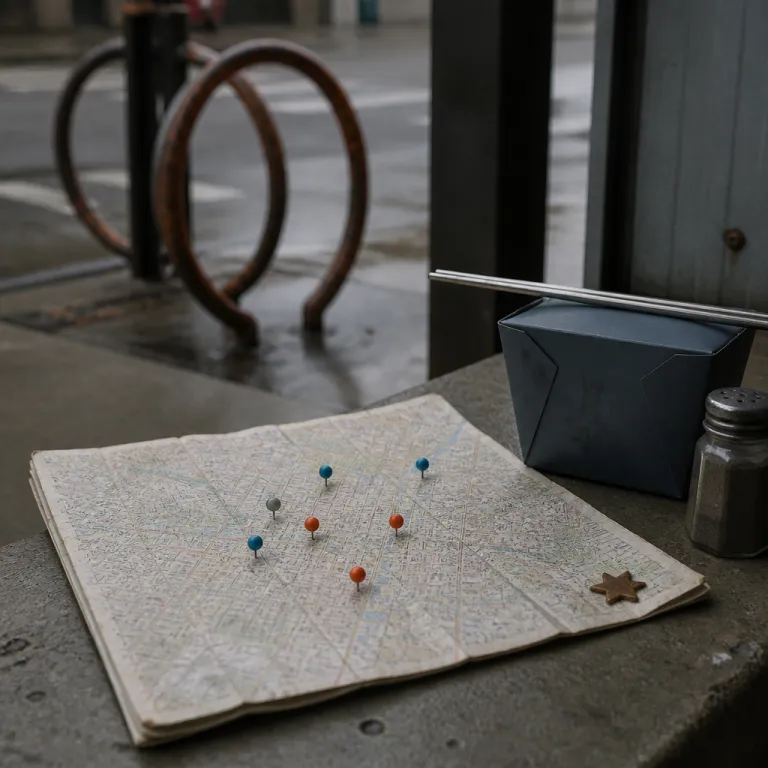
From Parisian white tablecloths to $2 tacos: what the Michelin map means for urban getaways
How a tyre company’s guidebook became a global city-break compass
Walk out of a converted warehouse stay in Mexico City and you face a choice. One way leads to a three-star restaurant with a months-long waitlist, the other to a corner stand serving al pastor for less than the price of your morning coffee. That tension sits at the heart of the current debate over how the Michelin Guide shapes food-focused city breaks and modern urban getaways.
The Michelin Guide was born in 1900 to send drivers toward good food and, in the process, sell more Michelin tyres, yet its star rating system still shapes where many travelers eat in dense urban neighbourhoods. As the guide expands into regions such as Yucatán, Jalisco and Puebla, after years of mapping Southeast Asia and Latin America, it brings a powerful restaurant guide into streets already rich with culinary arts and local history. For couples planning a gastronomy tourism escape, the question is no longer whether Michelin-starred restaurants exist in a city, but whether following those stars still leads to the most meaningful meals.
Why the first night in a city rarely needs three stars
In cities like Mexico City, Bangkok or Ho Chi Minh City, the best restaurant for your first night might not be one of the officially starred venues at all. It could be a family-run place two blocks from your guesthouse, where the cooking techniques have been refined quietly over years rather than showcased in a fine dining room. Hilton’s 2024 global trends report, The 2024 Hilton Trends Report: The Traveler’s Guide to 2024 (published January 2024), notes that 66 percent of travelers feel most excited by street food, which complicates the traditional Michelin narrative that equates white tablecloths with quality.
Urban travelers now arrive with Google Maps lists full of both awarded restaurants and anonymous taquerias, often cross-checked against TripAdvisor comments and TheFork reservations. Michelin itself acknowledges this shift; its own FAQ states plainly that it is adding new regions globally and that a listing significantly impacts restaurant patronage. That impact is real in neighbourhoods where a single star can transform a quiet street into a nightly queue, altering the supply chain of ingredients, the rhythm of service and even the rent profile of the surrounding blocks.
Balancing tasting menus with markets and street stalls
For a couple planning three nights in Mexico City, the question of how much to rely on the Michelin Guide becomes very practical. Do you book one three-star tasting menu and spend the rest of the trip grazing through markets, or spread your budget across several Bib Gourmand-level spots and a few no-name counters? The answer depends on whether you value the codified quality of a rating system or the looser, more serendipitous pleasure of following the smells of cooking through a neighbourhood at dusk.
What remains clear is that Michelin-starred addresses now sit alongside natural wine bars, vinyl shops and late-night cafés in the mental map of an urban getaway. The guide’s anonymous inspectors still move quietly through cities, assessing restaurants against long-standing criteria of consistency, technique and value. Yet for travelers who care as much about the street outside the restaurant as the plate in front of them, stars are becoming one data point among many rather than the final word.
How stars reshape neighbourhoods: from street stall to destination dining room
When a quiet local favourite becomes a global address
Spend a weekend in Bangkok’s Chinatown and you can watch gastronomy tourism in real time. One stall with a Michelin-level reputation draws a line of visitors with phones out, while three neighbouring places serve equally good food to mostly local regulars. This is where the influence of the red guide becomes less abstract and more about how a single rating system rearranges the life of a street.
When a restaurant earns one of the coveted stars, it often shifts from being a local place to a global address, especially in compact urban districts. Chefs suddenly navigate a new supply chain reality, sourcing more premium ingredients at scale while trying to protect the cooking techniques that made the restaurant special in the first place. Over a few years, the pressure to maintain Michelin-star status can push a once casual room toward fine dining formality, changing not only the menu but the clientele and even the opening hours.
Mexico City’s tacos versus tasting menus
Mexico City offers a sharp contrast between star restaurants and the $2 taquerias that many travelers now rank higher in their personal rating system. A three-star restaurant in Polanco might deliver extraordinary culinary arts, yet the couple staying in Roma Norte may remember more vividly the tiny restaurant where they ate standing up beside a tiled counter. As Mexico City chef Gabriela Martínez, who runs a 14-seat fonda in Colonia Juárez, told us in March 2024, “People come for the star once, but they come back for the tacos every night.” In this sense, the discussion around Michelin and food tourism is really a debate about what kind of memories urban travelers want to bring home.
The Bib Gourmand category is Michelin’s quiet admission that good food does not always require white tablecloths or three stars. In Ho Chi Minh City, for example, some of the most interesting Michelin-listed restaurants are those recognised for value rather than luxury, where local cooking meets a modest but thoughtful service style. Our own framework for reading a city block, explored in one block, three meals, often aligns more with Bib Gourmand selections than with the most formal starred restaurants.
Stars, gentrification and the risk to local diversity
Anonymous inspectors still visit each restaurant multiple times, but their presence can unintentionally accelerate gentrification in fragile neighbourhoods. A once quiet place with a single Michelin star can become a magnet for tourism, driving up rents and nudging out the very local cafés and markets that gave the area its character. Over several years, the guide’s success in highlighting quality can paradoxically erode the diversity that made a district compelling for urban getaways in the first place.
For travelers, the practical takeaway is to read the Michelin Guide as a curated list rather than a script. Use it to identify a few awarded restaurants that genuinely reflect local cooking techniques and ingredients, then spend the rest of your meals in unlisted spots where the only rating system is the number of locals at the tables. In cities where gastronomy tourism is booming, that balance between stars and serendipity often yields the richest sense of place.
Street food, data and desire: what travelers actually want to eat now
What the numbers say about modern culinary tourism
Look at how couples plan city breaks today and a pattern emerges. They might glance at the Michelin Guide to understand a destination’s culinary ceiling, but they build their daily itineraries around markets, street stalls and neighbourhood restaurants recommended by locals. This shift sits at the centre of the conversation about how formal restaurant guides intersect with the next decade of urban food-focused escapes.
Hilton’s global trends report, released in January 2024 and based on a survey of more than 10,000 travelers across nine countries, notes that roughly two thirds of travelers feel most excited by street food, a figure that tracks with what we see in cities from Lisbon to Tokyo. The culinary tourism market, valued at well over a trillion US dollars in recent industry analyses such as the 2023 Global Culinary Tourism Market report by Research and Markets, is being driven less by traditional fine dining and more by immersive local experiences that blur the line between tourism and daily life. When Ho Chi Minh City’s main food festival, the Ho Chi Minh City Food Festival organised by the city’s Department of Tourism, draws tens of thousands of visitors each year, it is not the three-star restaurants that anchor the programme, but the vendors whose cooking techniques have been honed on sidewalks and in alleys.
How digital habits create a parallel rating system
Digital behaviour reinforces this tilt toward the informal. Google search patterns show spikes not only for Michelin restaurants but also for phrases like “best tacos near me” or “late night noodles,” especially in dense urban cores. Travelers cross-reference the official restaurant guide with social platforms, then triangulate between a Michelin star, a local blogger’s praise and a friend’s message about a tiny restaurant hidden behind a market. Over the years, this has created a parallel rating system where emotional resonance and sense of place matter as much as technical quality.
Michelin has not ignored these currents; its expansion into Japan’s secondary cities, explored in our piece on emerging gastronomy cities, and now into Mexican regions like Yucatán and Puebla, signals a desire to capture more local nuance. The inclusion of street stalls and casual restaurants in some editions shows that anonymous inspectors are willing to sit on plastic stools as well as in plush dining rooms. Yet the core star system still privileges consistency, service choreography and certain forms of culinary arts that do not always align with the chaos and charm of a night market.
Using Michelin as an anchor, not a script
For urban travelers, the most useful approach is to treat Michelin-starred venues as anchors rather than the entire story. Book one awarded restaurant to understand how local ingredients are interpreted at the highest level, then spend the rest of your meals chasing the smells of grilling meat, frying dough or simmering broth through different neighbourhoods. In practice, that might mean pairing a three-star tasting menu in Bangkok with a self-guided crawl through Yaowarat’s street stalls, or balancing a celebrated Mexico City restaurant with an afternoon spent at a market counter where the only decoration is a handwritten menu.
This is where the debate becomes less about whether the guide is right or wrong, and more about how you use it. The red book can still signal quality and seriousness in a crowded field of online opinions, but it no longer needs to dictate every reservation. In the age of gastronomy tourism, the most memorable meals often happen in places that would never fit neatly into a traditional rating system.
A framework for food curious city breaks: when to follow stars, when to follow locals
Clarify your goals before you book
Planning an urban getaway now involves as many decisions about eating as about where to sleep. The influence of the Michelin Guide becomes tangible when you are staring at a three-night itinerary and trying to balance budget, curiosity and time. A simple framework can help you decide when to lean into Michelin-starred experiences and when to let the city lead.
Start by defining what you want from this particular trip, not from some abstract ideal of gastronomy tourism. If you are in Mexico City for the first time and care deeply about culinary arts, one three-star dinner might be worth the investment as a reference point for how chefs interpret local ingredients. If you are returning after several years, you may find more joy in a string of small restaurants where the cooking feels closer to daily life than to a tasting menu.
Plan by neighbourhood, not just by restaurant name
Next, map your days by neighbourhood rather than by individual restaurant names. Choose one area for each day, then layer in a mix of Michelin restaurants, Bib Gourmand addresses and unlisted spots that simply look and smell right when you walk past. Our guide to vibrant urban escapes uses the same principle for nightlife, and it works just as well for food; the best evenings often unfold within a few hundred metres.
Finally, be honest about how you like to eat. Some couples relish the theatre of fine dining, the choreography of service and the assurance that anonymous inspectors have stress-tested the kitchen over multiple years. Others feel more alive perched on a plastic stool, watching a single cook repeat the same motion hundreds of times with a level of quality that no rating system can fully capture. Both instincts are valid, and the most satisfying city breaks usually honour both.
Let consistency guide you, then let curiosity take over
Michelin’s expansion into new regions, supported by partnerships with TripAdvisor and TheFork, shows that the organisation understands its continued influence on tourism. Its methods, from anonymous inspectors to digital integration, aim to maintain a consistent global standard even as it enters more diverse culinary landscapes. For travelers, the opportunity lies in using that consistency as a backbone while allowing your own curiosity, and the advice of locals, to fill in the spaces between the stars.
In the end, the question is less about whether the guide still matters and more about whether it is the only voice you listen to. On an urban getaway, the most rewarding meals often come when you treat a Michelin star as an invitation rather than a command. Let the guide point you toward excellence, then let the city itself teach you how it really eats.
Key figures shaping the Michelin era of urban food travel
- Michelin currently lists more than 16,000 restaurants across over 40 destinations worldwide, according to figures shared by the Michelin Guide in its 2023 global overview, a scale that gives its restaurant guide significant influence on where international travelers choose to eat in major cities.
- Hilton’s 2024 global trends report, The 2024 Hilton Trends Report: The Traveler’s Guide to 2024, indicates that approximately 66 percent of travelers are most excited by street food, highlighting a clear gap between traditional fine dining stars and the everyday food experiences driving modern gastronomy tourism.
- Recent industry research, including the 2023 Global Culinary Tourism Market report by Research and Markets, values the global culinary tourism market at well over one trillion US dollars, with growth driven primarily by local and informal food experiences rather than only by starred restaurants and formal fine dining venues.
- Ho Chi Minh City’s main culinary festival, the Ho Chi Minh City Food Festival organised by the city’s Department of Tourism, has attracted around 80,000 visitors in recent editions, according to local tourism authorities, illustrating how urban food events can rival Michelin restaurants in their ability to draw international tourism to specific neighbourhoods.
- Michelin’s ongoing expansion, including new regional guides in Florida and recent entries into Mexican states such as Yucatán, Jalisco and Puebla, reflects a strategic effort to maintain relevance by recognising more diverse culinary scenes worldwide.